Art serves as a bridge to self-awareness and a deeper understanding of the world. Our visual art program encourages curiosity, imagination, and self-expression, helping students connect creatively with their surroundings through art and craft in school activities.
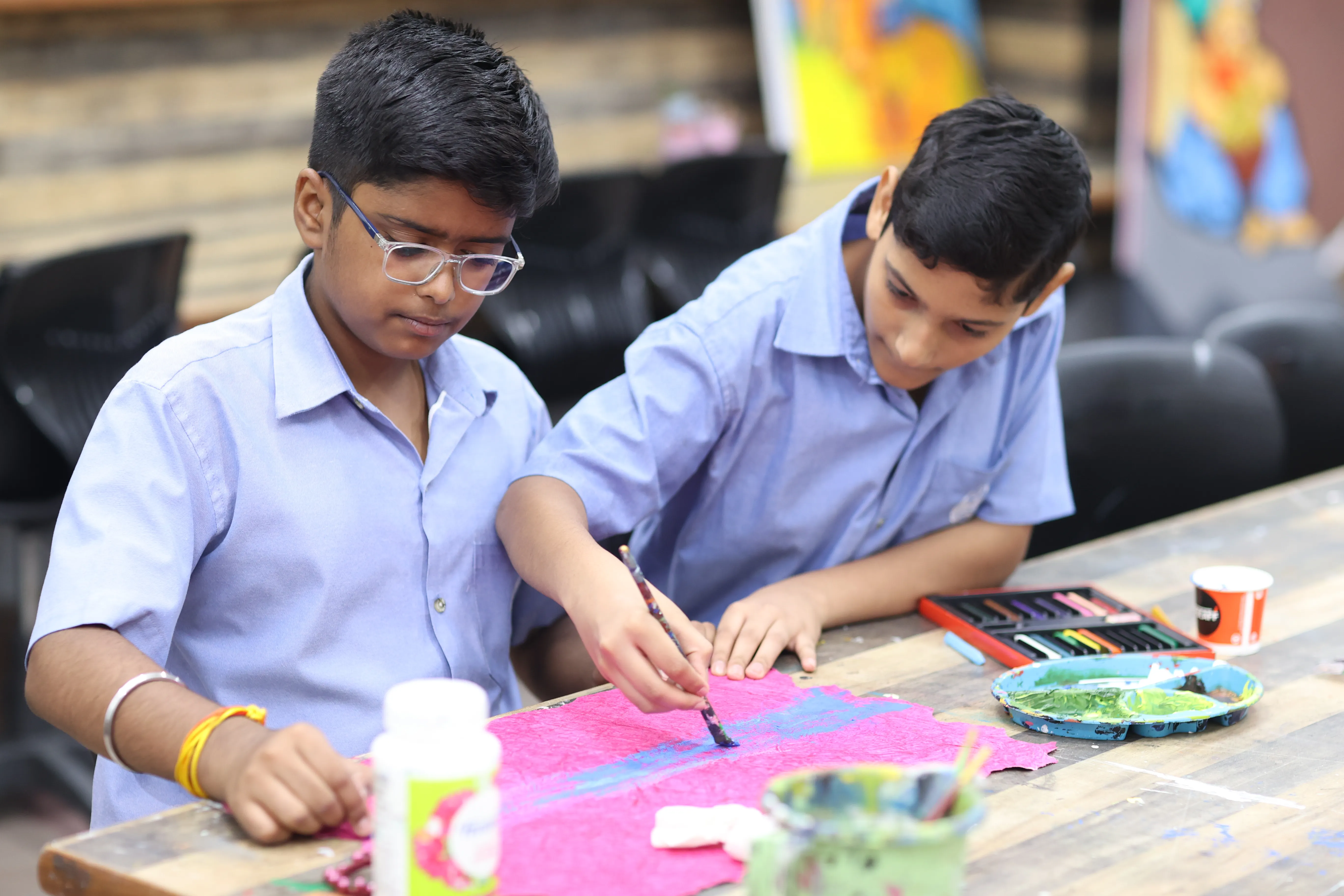
In Junior School, students are introduced to the joy of creativity through hands-on art and craft in school activities such as drawing, painting, pottery, and various craft projects. These engaging experiences allow young learners to explore colors, shapes, and textures in a playful and meaningful way.
The focus of art and craft in school at this stage is on the creative process rather than the final outcome. This helps children develop fine motor skills, visual awareness, and spatial understanding while enjoying the freedom of expression. Regular art and craft sessions also build confidence, imagination, and self-esteem.
In Middle School, students explore art and craft in school more deeply by choosing electives such as Art & Design or Pottery. These subjects allow them to develop their creative interests while strengthening technical and artistic skills.
Through structured art and craft projects, students learn important concepts such as composition, color theory, design principles, and digital media. They are also introduced to a wide range of artists and cultural art forms, helping them understand global artistic traditions.
This stage of art and craft in school encourages originality, critical thinking, and self-expression. It also helps students build a strong foundation for future creative studies or careers.
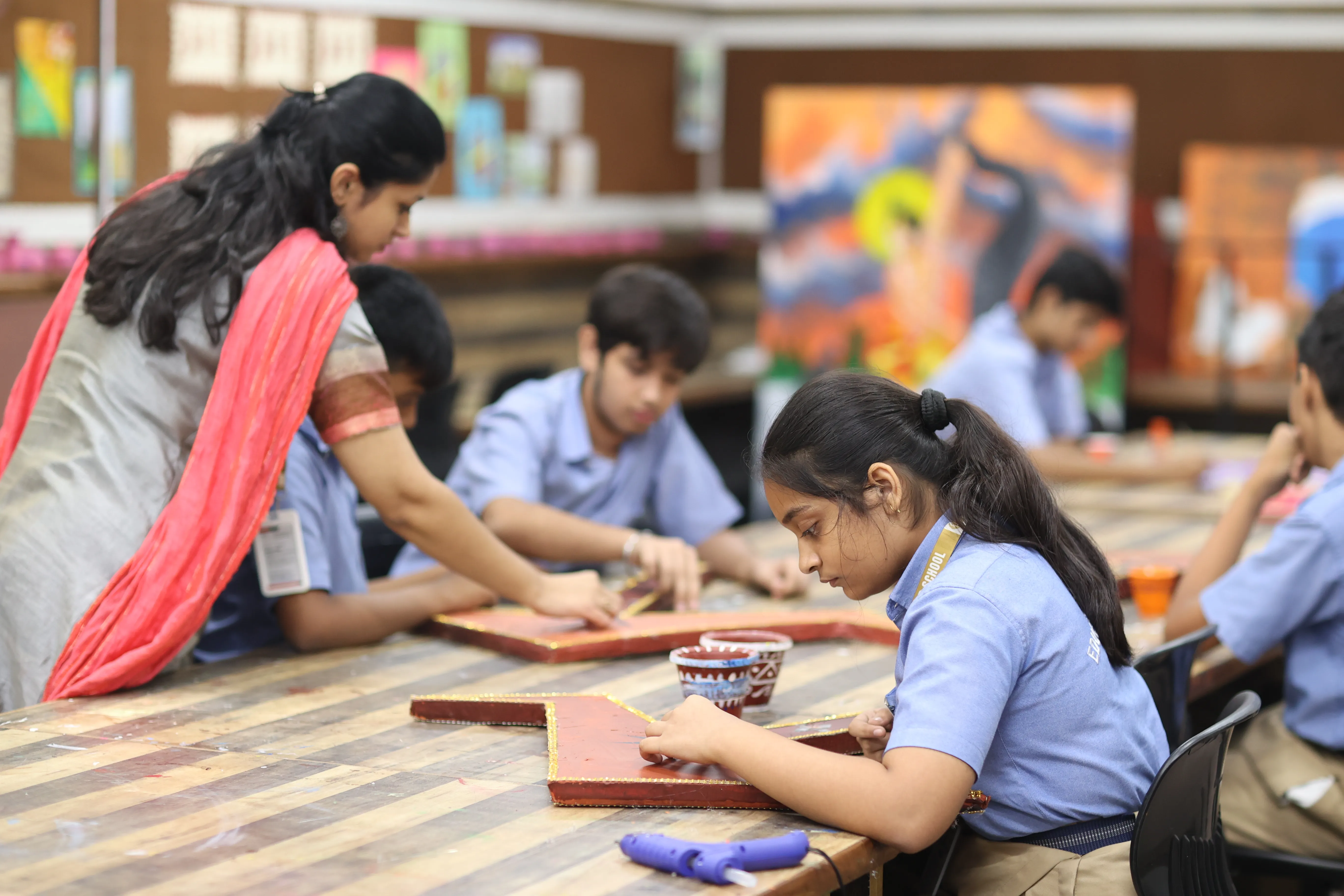
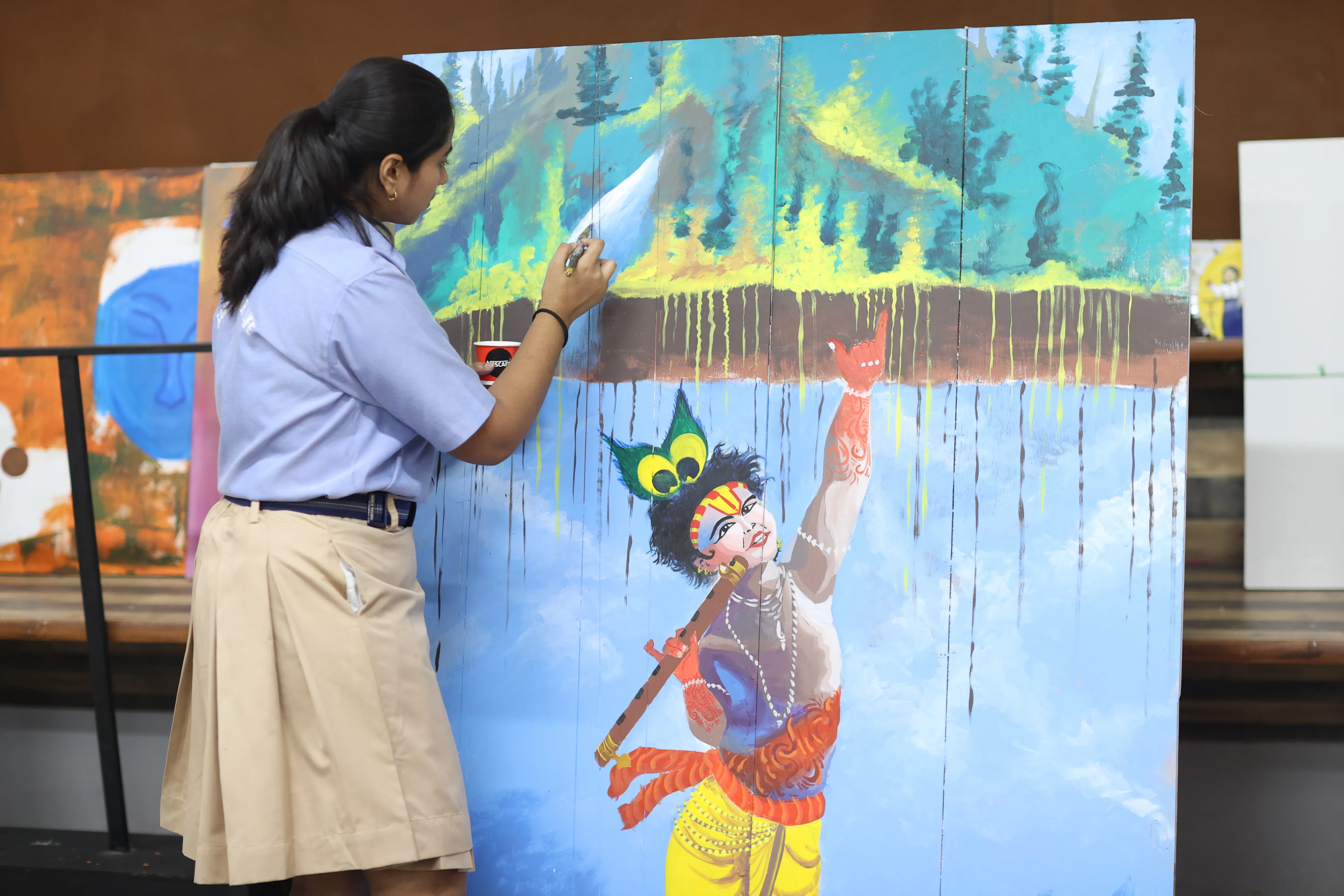
In Senior School, the art and craft in school program offers a comprehensive and in-depth learning experience in drawing, painting, and mixed media. Students are encouraged to experiment with a wide range of artistic materials and techniques, helping them develop advanced creative and technical skills.
The CBSE-based curriculum for art and craft in school is thoughtfully designed to strengthen artistic abilities while introducing key concepts of design, composition, and art history. This ensures that students not only improve their practical skills in art and craft, but also gain a deeper understanding of artistic traditions and global art movements.
Through continuous practice and project-based learning, students build a strong portfolio of creative work. This structured approach to art and craft in school prepares them for higher education in fine arts, design, and related creative fields.
Beyond technical learning, the program nurtures imagination, critical thinking, and self-expression. It helps students develop confidence in their artistic voice and inspires a lifelong appreciation for art and craft as a meaningful form of expression.